Quality

Naturally pure, Traditionally strong

Milk Check

How to find if milk is mixed with water?
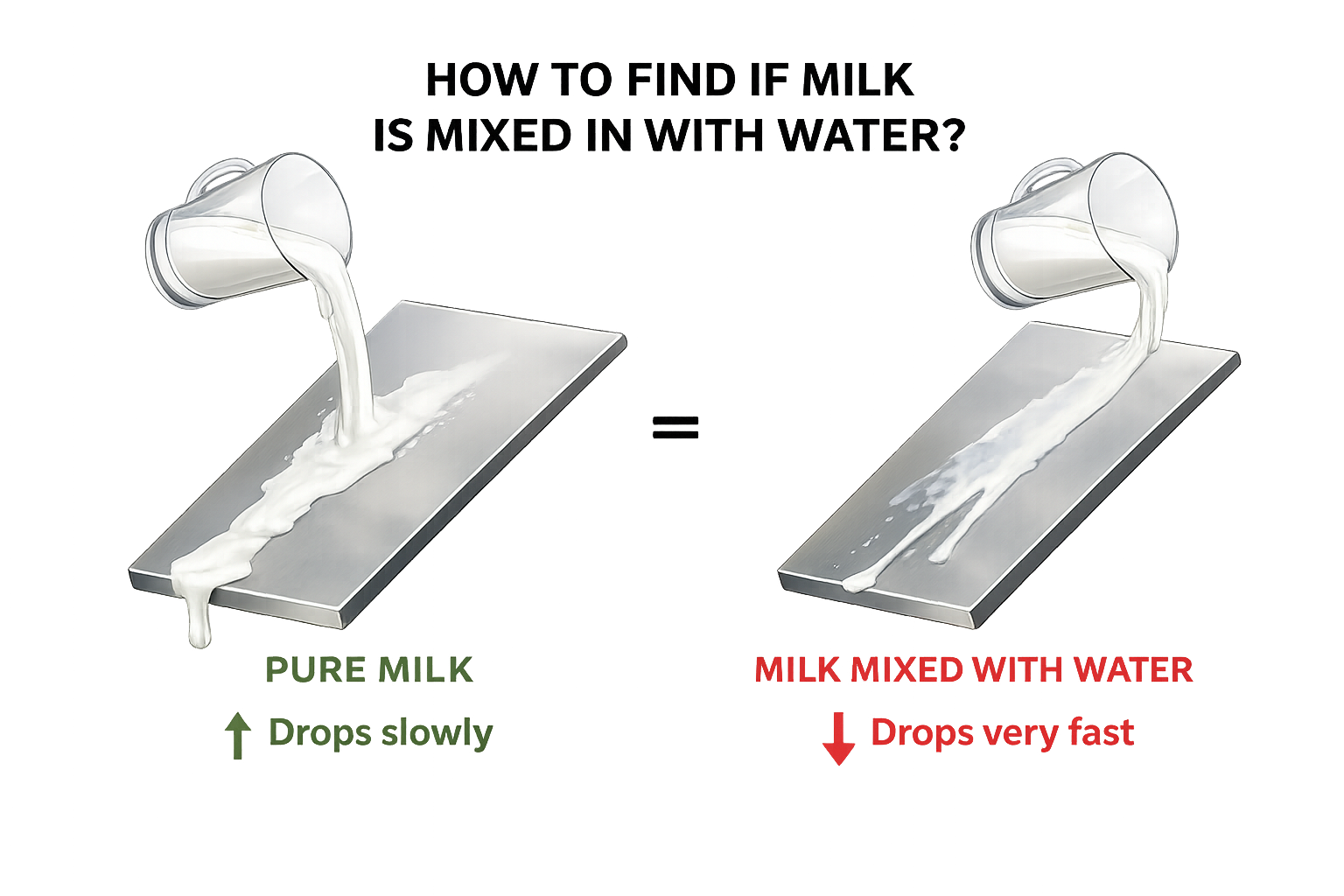
Milk quality test for water dilution

Take some milk and pour it on a smooth surface, then gently tilt that surface and observe how it behaves.

If the milk is mixed with water, the drops run down very fast. If the milk moves slowly with a richer trail, it is a stronger sign that the milk is pure and has not been diluted.
Milk Check

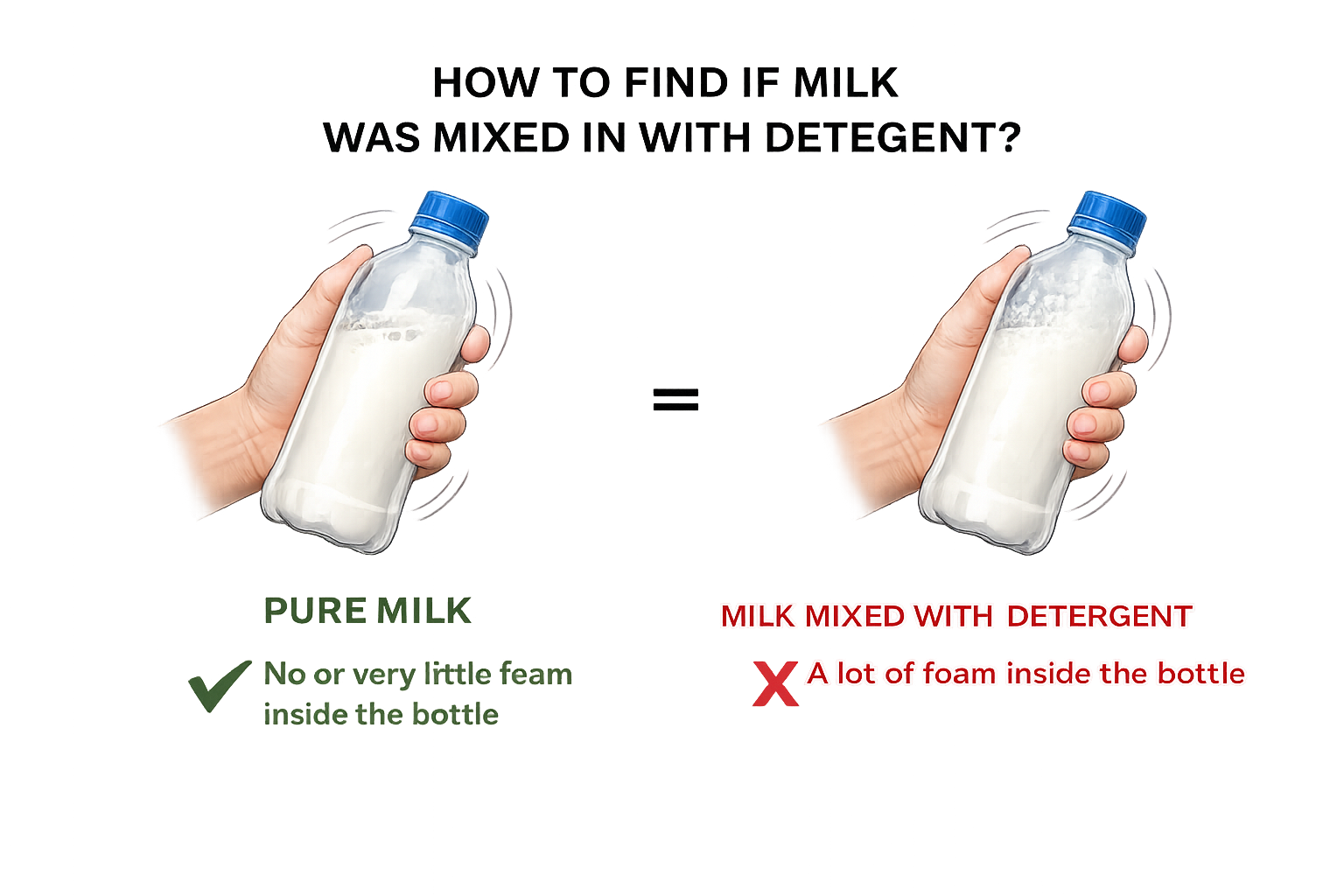
How to find if milk was mixed with detergent?

Milk quality test for detergent mixing

Take some milk and water in a single bottle and shake the bottle well so the reaction becomes easy to notice.

If you find more foam building up inside the bottle, it is a strong sign that detergent has been mixed in. If there is no unusual foaming, the milk is far more likely to be pure and not mixed with detergent.

Milk Check

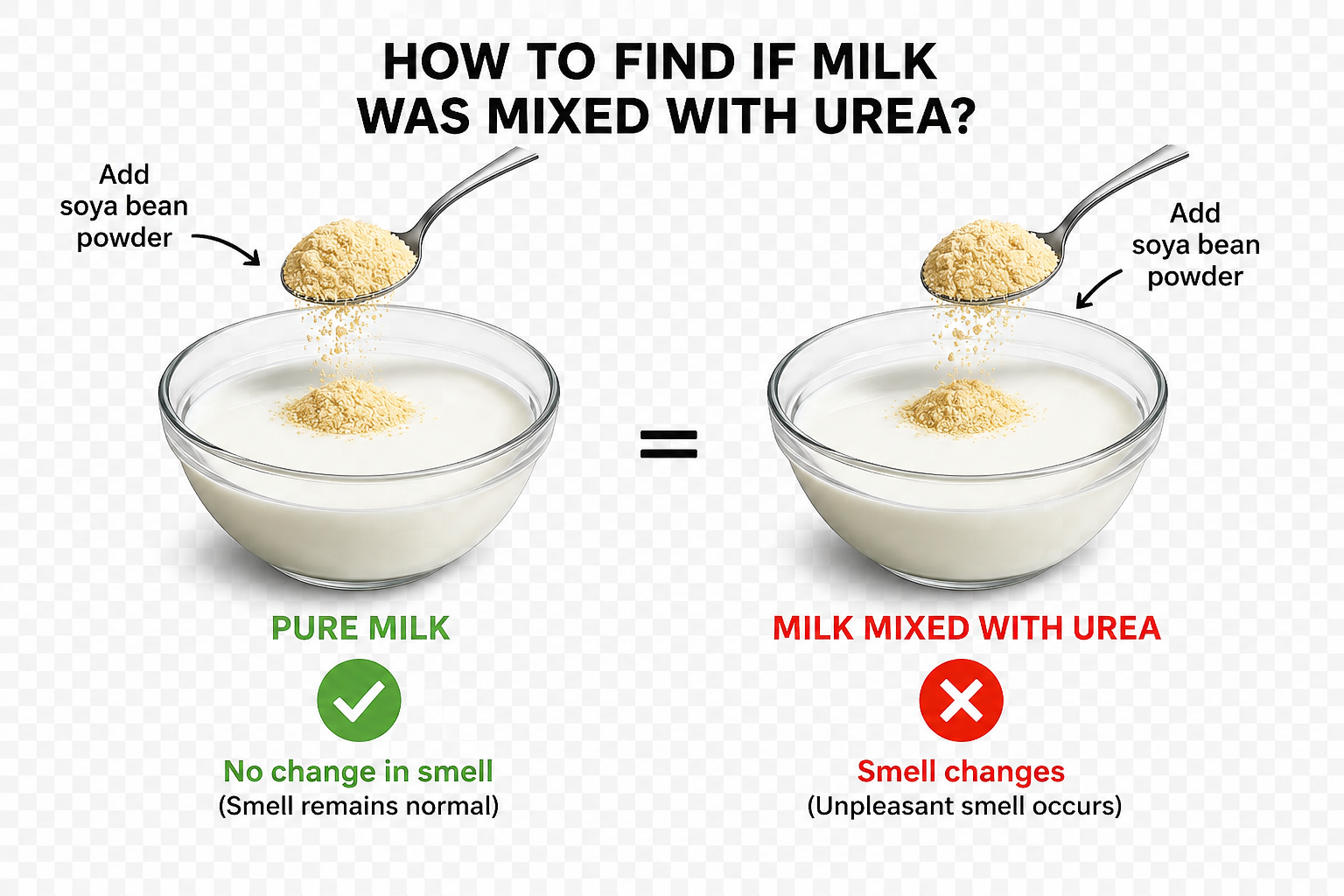
How to find if milk is mixed with urea?

Milk quality test for urea mixing

Take some milk in a bowl and mix it with soya bean powder so you can observe whether the reaction changes in a noticeable way.

If the smell changes after mixing, it is a strong sign that the milk may be mixed with urea. If the smell remains normal, the milk is a better sign of purity.

Milk Check

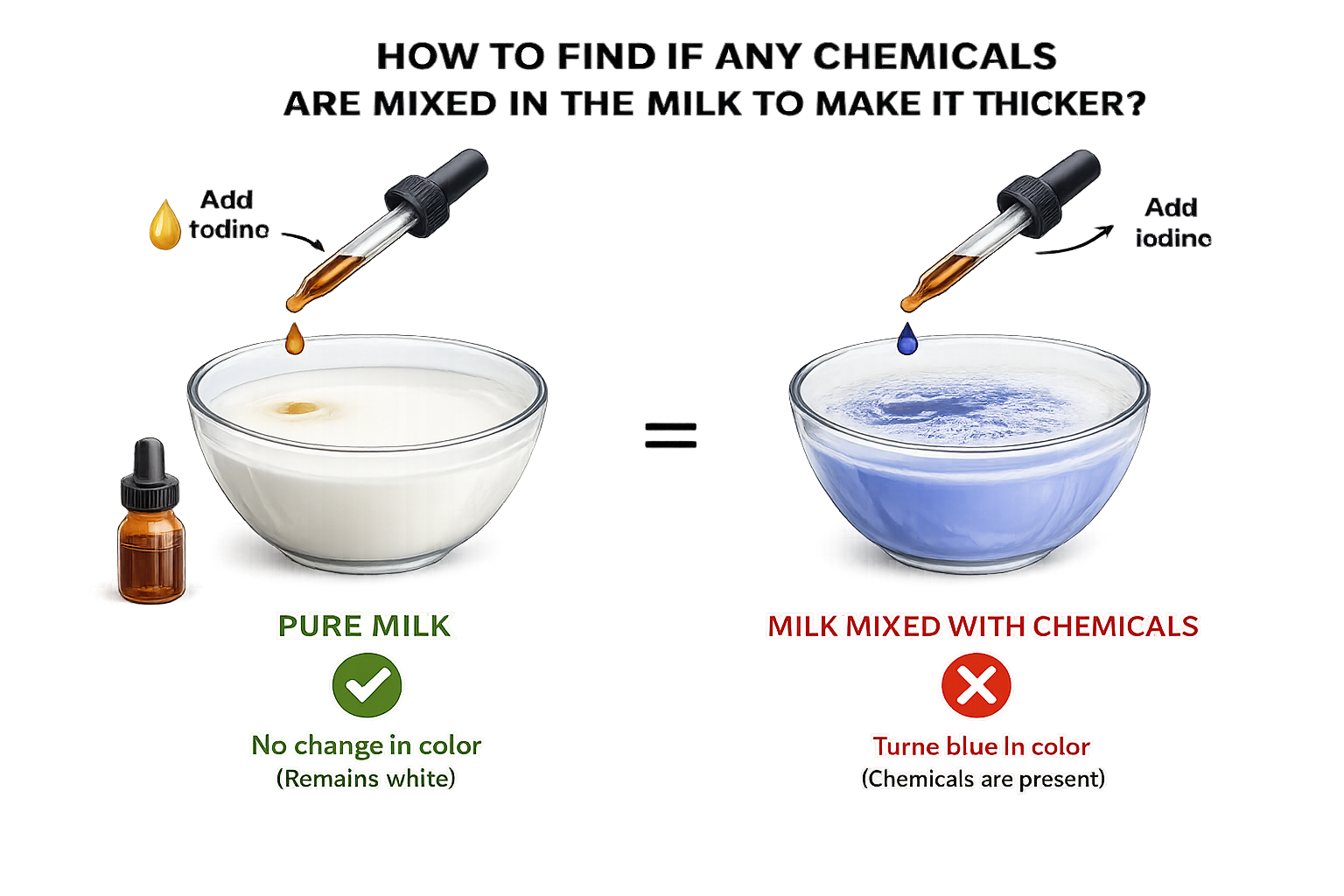
How to find if chemicals were mixed in to make milk thicker?

Milk quality test for starch or thickening chemicals

To make milk look thicker, some people may use starch, corn flour, rice flour, or similar additives. Add a little iodine to the milk to test for that kind of mixing.

If the milk changes its color to blue, that points to starch or similar thickening chemicals being used. If there is no such color change, the milk is a stronger sign of being pure.

Milk Check

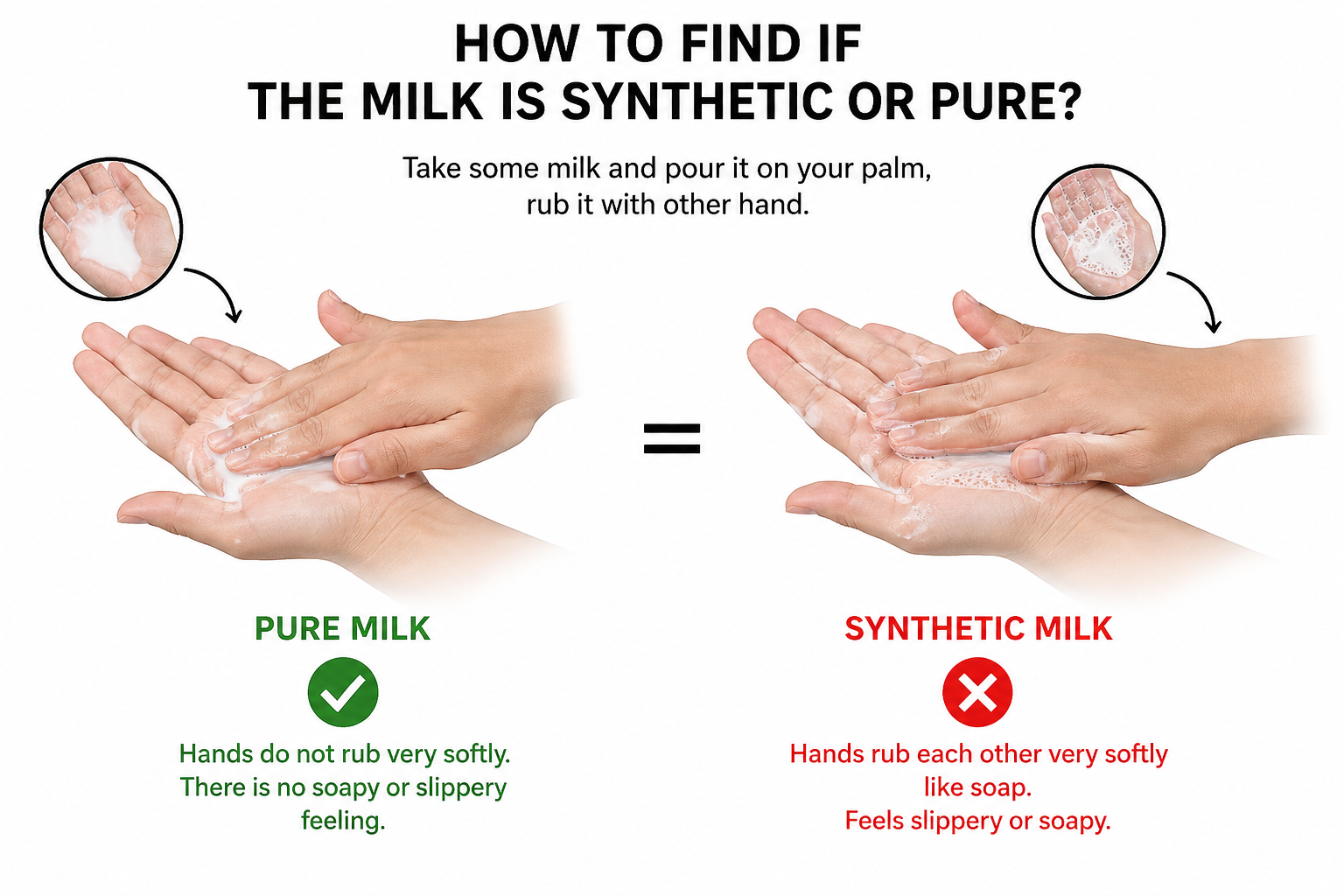
How to find if the milk is synthetic or pure?

Milk quality test for synthetic milk

Take some milk and pour it on the palm of your hand, then rub it gently with the other hand to feel how the texture behaves.

If the milk is synthetic, your hands may rub against each other very softly, almost like soap. If that slippery feeling is not there, the milk is a stronger sign of being pure.

Silage Story

How silage supports stronger cattle feeding.

A step-by-step look at how Vajra Farms preserves green fodder, protects nutrition, and keeps feed dependable across seasons.

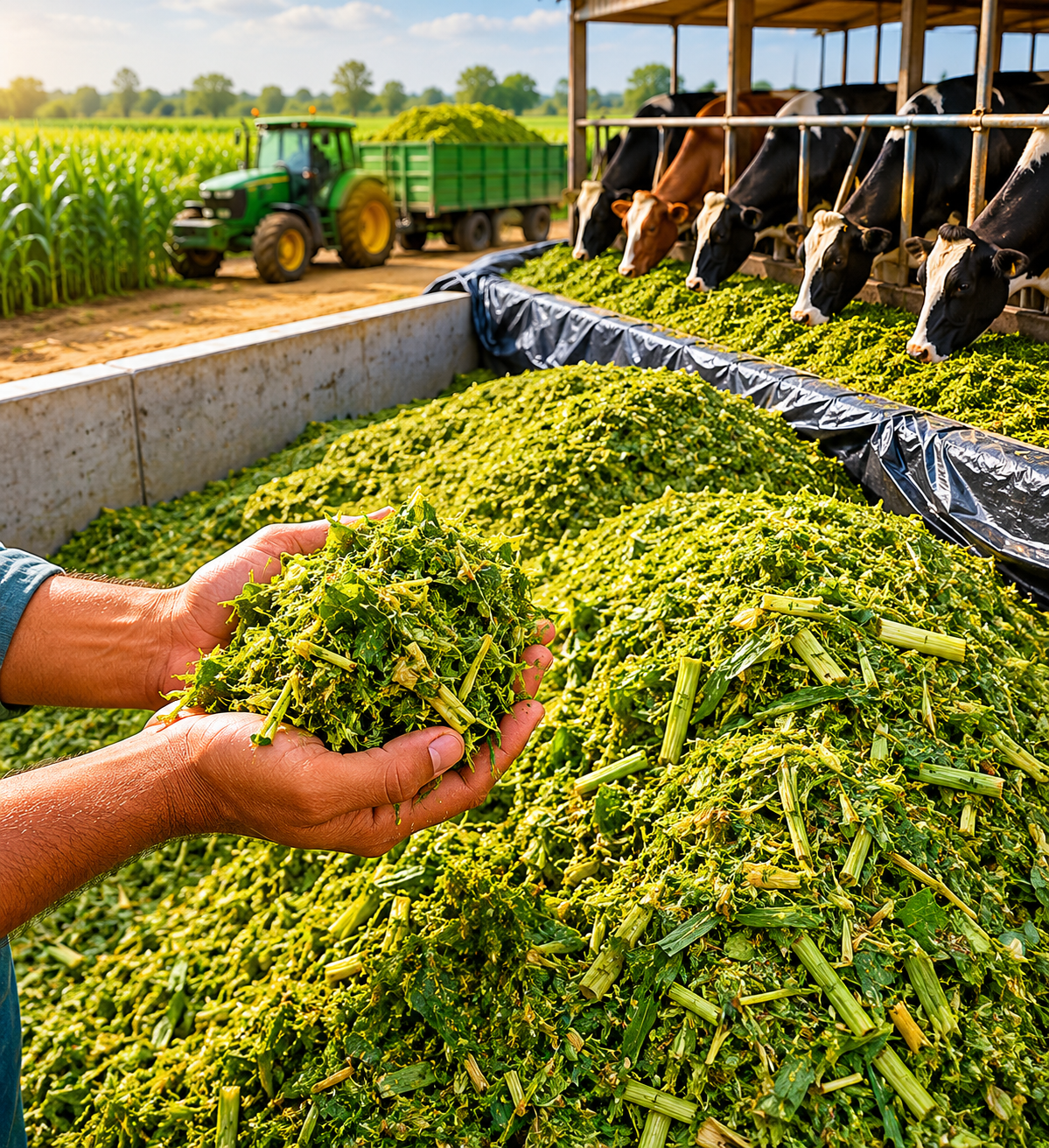
Fresh silage preserved as green fodder
01 What is Silage? 02 What Goes Into It? 03 How It Is Stored 04 Sealing Process 05 Benefits

01

What is Silage?

Silage is chopped green fodder that is preserved in an airtight condition so it stays nutritious for a long time.

  • Prepared by storing fresh green fodder without air.
  • Helps retain feed quality even after harvesting.
  • Useful when fresh fodder is not always available.

02

What goes into it?

Silage is commonly prepared from green fodder crops that carry good nutrition and ferment well when chopped and packed.

  • Maize is one of the best crops for silage making.
  • Sorghum or jowar can also be used well.
  • Napier grass is another strong fodder option.

03

How is it stored?

The chopped fodder is packed into a pit or tank and pressed tightly so there is as little air left inside as possible.

  • Stored inside a pit, trench, or dedicated tank.
  • Packed tightly layer by layer for better preservation.
  • Less air inside means better silage formation.

04

How is the pit sealed?

Once the pit is filled and packed properly, it is covered airtight so fermentation can happen safely and evenly.

  • Cover the surface fully with strong plastic sheets.
  • Seal the edges carefully so outside air does not enter.
  • Allow about 45 days for proper fermentation.

05

Why does silage help?

Good silage supports healthier feeding routines, steadier cattle condition, and more dependable farm management through the year.

  • Helps maintain nutritious fodder across seasons.
  • Can support milk yield and reduce feed stress.
  • Useful when green grass becomes limited in summer.

Silage Reel

See the silage routine in motion.

A closer look at the everyday feed care behind healthier cattle, steadier nutrition, and naturally strong farm routines.

Ready to Begin

Bring farm-fresh dairy into your daily routine.

Start with a 3-day trial, set up a household subscription, or talk to us about dependable bulk supply for your business.